|
|
|
Christ-centred. Creative. Canadian.
|
|
|
|
|
|
|
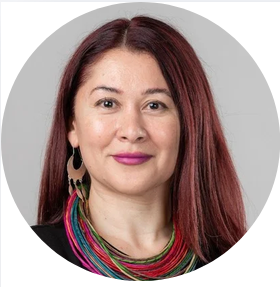
As a child, my family was separated due to immigration policies and now I’m a migration scholar. I have long pondered: whose lives and families are valued and devalued by state policies? Who can count on having a nuclear and extended family by their side? I now know; family separation is a constant feature of life for racialized and working-poor immigrants, refugees, migrant workers and their kin.
|
|
|
|
During the repressive military dictatorship in Chile, my father left my mother and me to seek a better life for us in Canada. My mother lived with a paralyzing fear of being forgotten by my father during the seemingly endless time to process his immigration papers. As a child, I could not articulate the internalized fear, family instability and abandonment that I was feeling. My body spoke for me: I lost a lot of my hair and my appetite. When we were finally reunited in Canada after two years, I had to grieve the anguishing separation from my maternal grandparents and young aunt, who was like a sister to me. My world once again turned upside down. I would not see them for the next ten years. During a recent visit to my grandmother’s place in Toronto, I asked her how she felt when my mom and I emigrated to Canada. She said, “I thought I was going to die. I would cry myself to sleep every night thinking I would never see you again.” I personally know that forced family separation induces a multitude of scars that can last a lifetime.
|
|
These scars were created by racist state policies, global economic apartheid and imperialism that limit the right to mobility and human rights based on a hierarchy of citizenship.
|
|
|
|
Despite the establishment of international instruments such as the Convention for the Rights of the Child and the Universal Declaration of Human Rights during the post-war period espousing the importance of the family unit and the right of children to be with their families, the reality for families of the Global South is quite another thing. State policies unequivocally shape and impact families differentially.
|
|
The foundation of Canada itself is based on the drive to annihilate Indigenous families and peoples through violent overt and covert settler-state policies such as the Residential School System. By contrast, white families were constructed as the cornerstone and the rightful heirs of the settler-nation. The Canadian government officially apologized for many of these injustices yet policies of painful family separations continue, including through immigration policies.
|
|
|
|
The damaging effects of family separation among Filipina caregivers in Canada are one of these notable contemporary cases.
|
Pediatrician Shruti Simha asserts that “extremely stressful experiences, including family separation, can disrupt a child’s brain architecture and cause irreversible damage to lifelong development,” among many other physiological implications. Early stresses in a child’s formative years can make it difficult to relate to ourselves and others in a healthy manner.
|
Gabriel Allahdua, a migrant justice organizer and a former migrant worker himself shares: “Being a migrant farmworker means that you are in a foreign country, away from your family, away from your friends, away from the community that you grew up in . . . and the hardest part of it all is being away from your family . . . especially difficult – even inhumane – is being separated from your children for eight months at a time.”
|
Rolando said, “It is very worrying that our family is in Mexico, very worrying. That is the main problem we have here, thinking that we are so far from our family. How are my elderly parents? How is my wife? How are my children?”
|
A mother, Lorena, expressed, “It is really hard because . . . you are coming here [Canada] to financially support your kids but at the same time you get here with a broken heart.”
|
|
Edited excerpt from A Renewed Canadian Welcome, edited by Emilio Rodriguez and published by McGill-Queen’s University Press in March. Evelyn Encalada Grez is a contributor to A Renewed Canadian Welcome.
|
|
|
|
|
|
Did someone forward this newsletter to you?
|
|
|
|
|
|
RESISTING ICE WITH NON-VIOLENCE
|
|
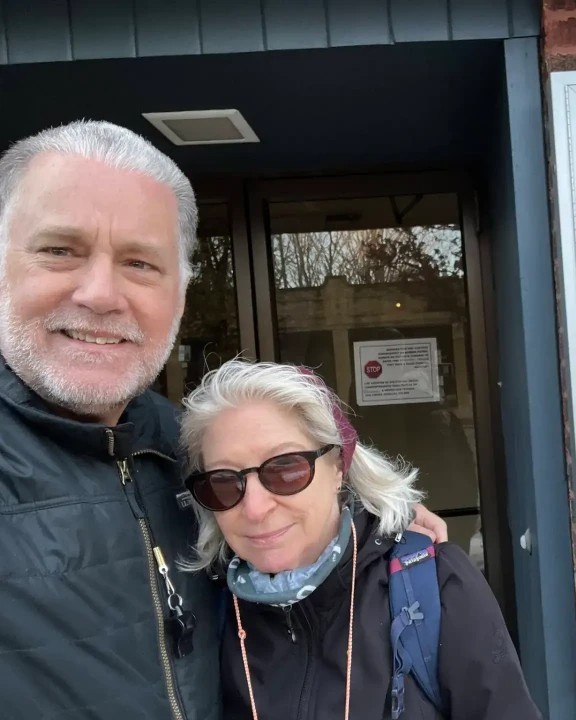
Here in Canada, we are bombarded with stories of ICE round-ups and detentions. We don’t hear as much about active resistance by people of faith such as Dan and Emily Coynes.
|
|
|
|
|
|
REFUGEE RIGHTS
|
|
While claiming to be an international leader in welcoming refugees, Canada continues to restrict pathways to access asylum in-country. As Christians, we should call on our elected officials and institutions to embrace principles of hospitality and mercy.
|
|
|
|
|
|
AFTER ROXHAM ROAD CLOSED
|
|
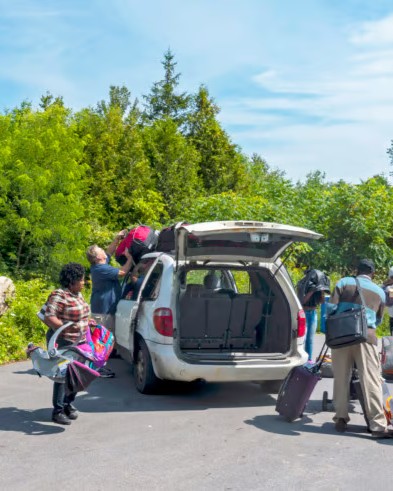
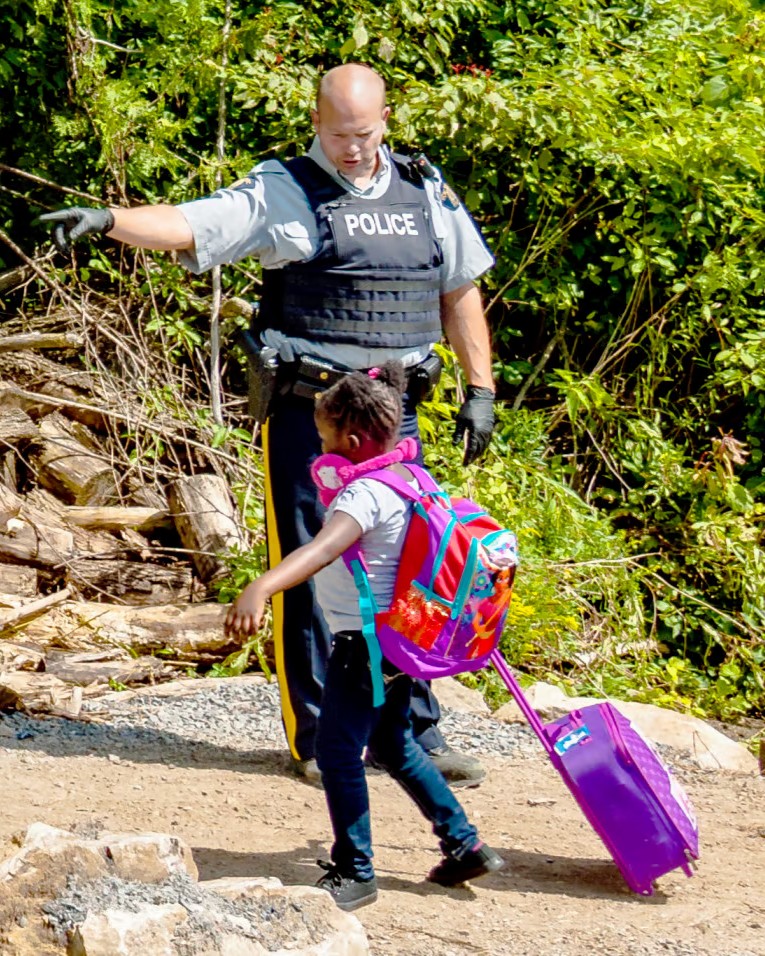
Since March 25, 2023, when the Canadian government closed the crossing at Roxham Road, refugees arriving at the rural Quebec border seeking entry to Canada have been turned away.
|
|
|
|
|
|
|
|
Have you ever heard the tagline "redemptive journalism"? Here at Christian Courier, that's how we identify our mission. Although we report on difficult topics, we find a redemptive angle in every story we publish.
|
|
|
|
|
|
   
|
|
|
|
|
|