|
|
|
Christ-centred. Creative. Canadian.
|
|
|
|
|
|
In June I sat in the lobby of a mental health centre. What if I don’t have OCD? I wondered. I tried to push the thought away.
|
|
Two years prior, a counsellor at my university suggested I see a psychiatrist to be diagnosed with obsessive-compulsive disorder (OCD). Now that my name was at the top of the waitlist and I was only moments away from my appointment, I was struck by the thought that if I didn’t have the label of OCD, I would never be able to understand my inclination to obsessive-compulsive tendencies.
|
|
|
|
|
I must get a pet peeve out of the way: I dislike when people use “I’m a bit OCD” as a tagline adjective to describe a quirk, emotion or tendency. Because here’s the thing: OCD isn’t about wanting your desk organized or needing a picture frame to hang perfectly straight. These can be indicators, but there is much more to the disorder. The Mayo Clinic describes OCD as “a pattern of unwanted thoughts and fears known as obsessions” that use compulsive behaviours as an attempt to quell them. OCD is often diagnosed when these obsessive-compulsive behaviours interrupt one’s daily life or cause great distress.
|
|
|
|
Mid-session, I realized my worrying was for nothing when the psychiatrist asked if I ever catastrophize internally and create a habit externally to prevent it. I couldn’t help but laugh as I answered: “Yes, all the time.”
|
|
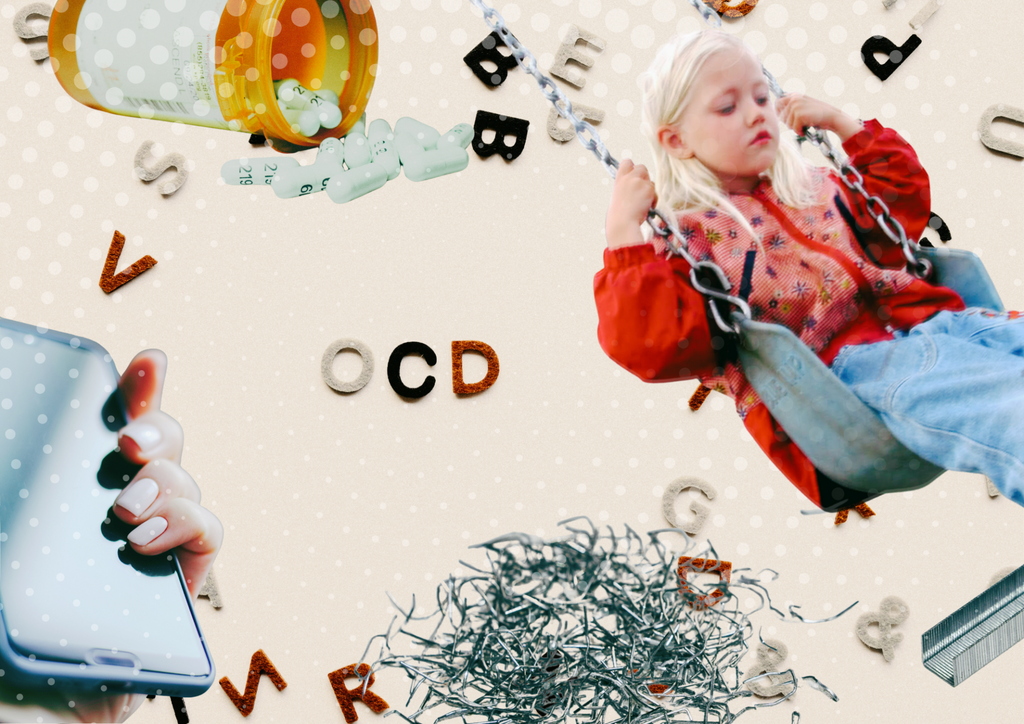
As a kid, I collected used staples in a pile on the top of my bookshelf. I believed that if I threw them away, something bad would happen to my family.
|
|
|
|
Every so often, I would stand on a chair, reach to the top, and take one down. I dug the metal under my fingernail, convincing myself that the prick was only a glimpse of what I’d feel if I didn’t keep the collection. Housefires, car crashes, sickness, shootings, rejection – a list of what-ifs drew sharp lines around my childhood and restrained me within, ruling over the way I went up stairs, organized my toys and crossed the street. In grade one, I washed my hands until they cracked with dehydration. In every building I found myself I counted the exact number of ceiling tiles, then re-counted. I memorized as many license plates as I could.
|
In my late teens, I could not go to sleep until I had checked every social media app on my phone at least five times. I still feel like if I forget to pray about someone, something bad will happen to them. A lot of my thoughts begin with these two little words: what if? When combined, they produce an overwhelming sense of dread.
|
If I dwell on a worst-case scenario for too long, I convince myself that it has already happened. Freeze-frame images of disaster in saturated tones of panic ricochet through my imagination. The harder I try to think these thoughts away, the more persistent they become.
|
It’s not that I necessarily think these scenarios will happen; I believe that if I don’t say them aloud, then they will. And I cannot bear the thought that, post-disaster, I could look back on the situation and think: If I had predicted this, it wouldn’t have happened.
|
It’s superstitious thinking, but it feels logical when I am in the midst of it. Counselling and medication might dull the urgency of these thoughts, but I will always have a way of returning to catastrophe. The circular track of OCD is a familiar path to tread. It feels safe. It feels like control.
|
To understand OCD, I have to pull each word out to see what it means on its own. Obsessive: paying attention to something in great detail. Compulsive: the overwhelming desire to do something. Disorder: the state of the world. Now put them back together, and you get a hyperfixation on pulling order out of the chaos.
|
Doesn’t everyone, to an extent, feel this way? Every single person, while being fearfully and wonderfully made, shares a human longing to make sense of the world’s chaos. OCD is just one way of expressing this innate desire.
|
The process of normalizing OCD begins with breaking the misconception that it is merely a character quirk or a preference for organization. Instead, we must ask the age-old question: What is it in us that longs for perfection, for things to feel just a little bit better?
|
We may not know all the answers, but as Christians, we are equipped with a hope incarnate in Jesus Christ, a promise of redemption from the ashes of catastrophe. And, as I remind myself, the words we forget in prayer are heard by the creator of the universe all the same.
|
We spend so much time trying to sand down the jagged edges of life until it feels right in our hands, the grooves a better fit into our palms and plans. I think OCD is just another way of trying to whittle life down into something that makes sense.
|
|
I am fearful, yes. But I am wonderfully made.
|
|
|
|
|
|
Did someone forward this newsletter to you?
|
|
|
|
|
|
THE RIPPLE EFFECT OF STIGMA
|
|
According to the Mental Health Commission of Canada, about one in five people experience a mental health problem or illness each year. By age 40, 50 percent of Canadians will have had a mental health concern.
|
|
|
|
|
|
SKETCHING A NEW NARRATIVE
|
|
Hoekstra’s ADHD diagnosis was confirmed when she was an adult, but she said it would have helped to hear it earlier. “I think it would have made a huge difference, a positive one. I would have understood myself more.”
|
|
|
|
|
|
RISING ABOVE THE BUZZ OF INTRUSIVE THOUGHTS
|
|
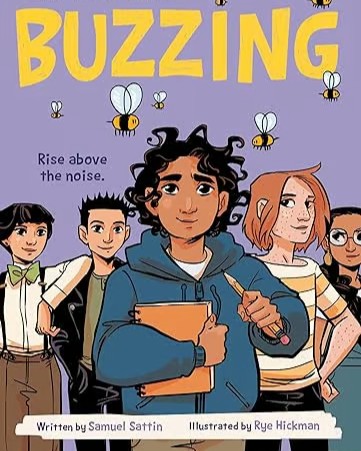
Buzzing, a graphic novel written by Samuel Sattin, is twelve-year-old Isaac Itkin’s story of navigating the specific challenges of obsessive-compulsive disorder (OCD) alongside the concerns of middle school.
|
|
|
|
|
CHOOSE REDEMPTIVE JOURNALISM
|
|
|
|
|
From loss to sickness to relationships, there's a lot to be worried about in life, especially for over-thinkers! Christian Courier doesn't know all the answers, but we like to ask the tough questions. And we try to find a redemptive angle in every story we publish.
|
|
|
|
|
|
   
|
|
|
|
|
|